LEARN
ORGANIZATIONS
Recommended Organizations
for Global Educators (clickable link)

Key Terms & Definition
GLOBAL EDUCATION
Global education is an intentional approach to teaching and learning that prepares students to understand and participate in an increasingly interconnected world. It encourages learners to investigate issues beyond their immediate experience, recognize and value diverse cultural perspectives, communicate and collaborate across differences, and understand the connections between local communities and global systems. It also challenges educators to take the work they are doing in the classroom and shape it to better prepare students to impact the world around them. Rather than existing as a separate subject, global education is a lens that can be applied across disciplines, helping students develop the knowledge, skills, empathy, curiosity, and agency necessary to engage thoughtfully with others and take informed action as members of both their local and global communities.
The idea that it provides a lens across content areas is incredibly important. We are not talking about a mere snapshot moment (International Day or Black History Month etc.). We are talking about a constant recognition of the global impacts upon our students and their learning.
GLOBAL COMPETENCY
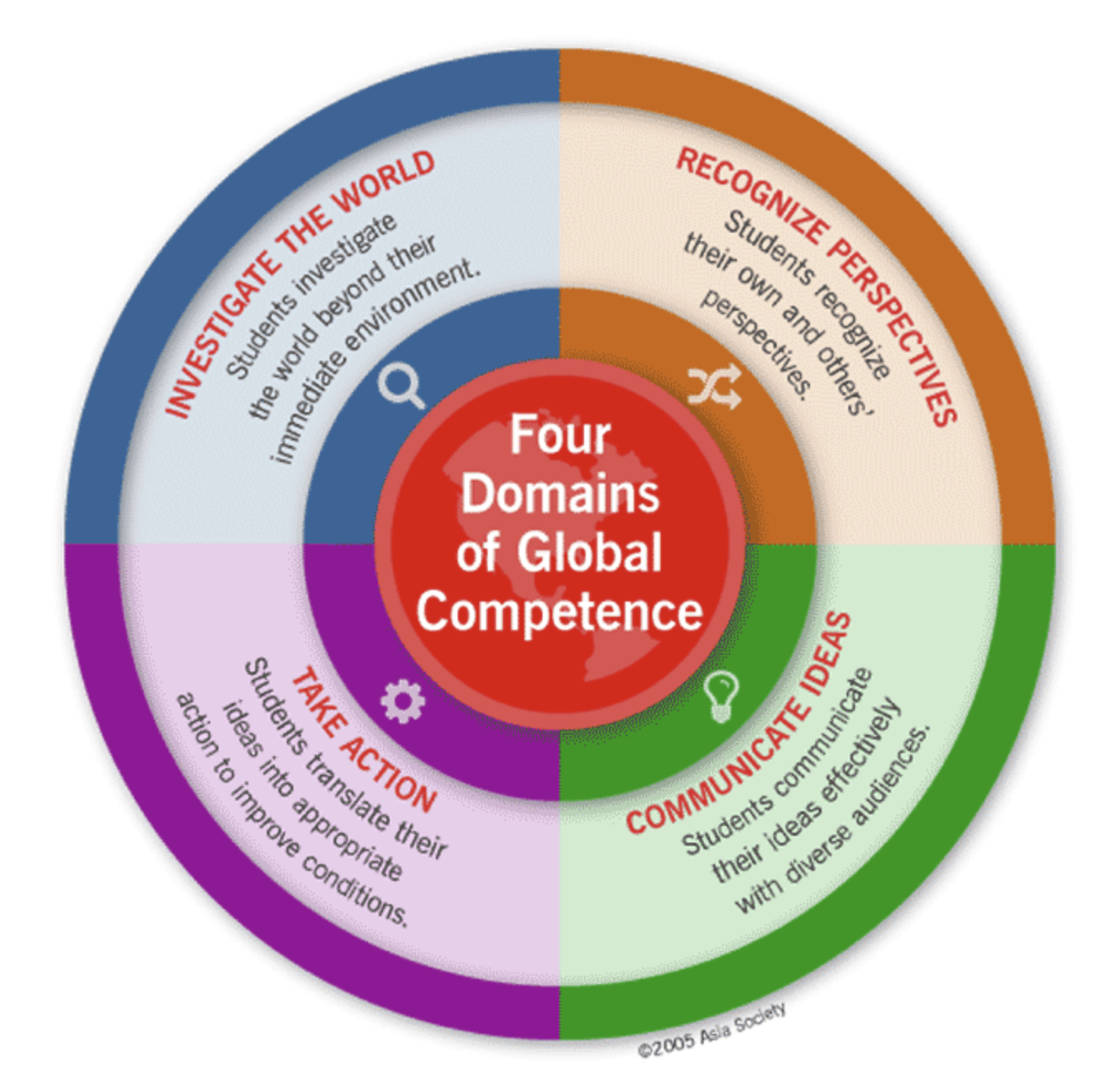
Global competency is the ability to understand, communicate, and work with people and ideas from different cultures and perspectives. A globally competent person is curious about the world, considers viewpoints beyond their own, communicates respectfully across differences, and understands how local and global issues are connected. It also means using what we learn to make thoughtful choices and take action in our schools, communities, and the wider world.
GLOBAL EDUCATION vs. GLOBAL COMPETENCY
So, what’s the real difference between these two closely related terms?
GLOBAL EDUCATION represents the process and approach that educators use to prepare students.
GLOBAL COMPETENCY represents the capacity a stakeholder (an educator, a student, an administrator, a community member, etc.) develops to understand and engage with the world around them.
Asia Society works with educators, schools, and communities to prepare students to understand and participate in an increasingly interconnected world. Its global education work provides frameworks, resources, and professional learning that help educators teach students to investigate the world, recognize different perspectives, communicate across cultures, and take informed action.
World Savvy works with educators, schools, and districts to build global competence into everyday teaching and learning. Through professional learning, coaching, and classroom resources, it helps students develop the skills to understand different perspectives, explore real-world issues, collaborate across differences, and take meaningful action in their communities and the world.
Organisation for Economic Cooperation and Development (OECD)
The OECD examines how education systems around the world can better prepare young people for increasingly diverse and interconnected societies. Its research and global education frameworks help educators and policymakers understand how schools can develop students’ cultural awareness, critical thinking, and ability to engage thoughtfully with global issues.
The United Nations and UNESCO promote education as a powerful tool for building peace, reducing inequality, protecting human rights, and creating a more sustainable world. The Sustainable Development Goals (SDGs) provide 17 shared global goals that give educators and students a framework for exploring real-world challenges and connecting classroom learning to issues affecting communities around the world.
National Geographic Education uses geography, exploration, science, and storytelling to help students examine the world through multiple cultural, environmental, historical, and geographic perspectives. Its resources support global competency by encouraging learners to think critically about an interconnected world, consider perspectives beyond their own, and use their knowledge to make informed decisions and take meaningful action.
ADDITIONAL RESOURCES
Global Citizenship Education: Topics and Learning Objective
UNESCO, 2015
This UNESCO resource provides educators with a practical framework for integrating global citizenship education into classroom teaching and learning. Organized around cognitive, socio-emotional, and behavioral learning domains, it offers age-appropriate topics and learning objectives that can be adapted across grade levels and subject areas. Educators can use the framework to design lessons that help students explore global issues, recognize diverse perspectives, develop empathy, and consider how they can take informed and responsible action.
Global Citizenship in the Classroom: A Guide for Teachers
OXFAM, 2015
This Oxfam guide provides educators with practical strategies for bringing global citizenship into everyday classroom teaching across subjects and grade levels. Through classroom approaches and reflective guidance, it helps teachers engage students with complex global issues, multiple perspectives, local-global connections, and questions of social justice and equity. Educators can use the guide to move global learning beyond simply studying other places and instead create opportunities for students to think critically, examine their own assumptions, and take informed, reflective action.
Harvard Graduate School of Education, 1967 - Present
Harvard Graduate School of Education’s Project Zero explores how educators can help students develop the skills and dispositions needed to navigate cultural diversity, global interdependence, and multiple perspectives. This resource brings together research-based projects, frameworks, teaching approaches, and classroom tools focused on developing global and intercultural competence across a variety of educational settings. Educators can explore these resources for practical strategies to design learning experiences that encourage perspective-taking, critical thinking, meaningful engagement with global issues, and connections between students’ local communities and the wider world.
Foster Global Competency in Your Classroom
EDUTOPIA: James Fester - June 2026
This Edutopia article offers educators practical ways to incorporate global competency into the lessons and content they are already teaching rather than treating global education as an additional subject or initiative. Using examples from multiple content areas, it demonstrates how teachers can help students investigate the world, recognize diverse perspectives, communicate ideas, and take meaningful action. Educators can use these strategies to make small, accessible shifts in existing curriculum that connect classroom learning to authentic global issues and experiences.
My Journey from Classroom Teacher to Global Education
TEDx TAMU: George Hademenos - March 2022
In this TEDx talk, classroom teacher George Hademenos shares how his own experiences with global education transformed the way he connects curriculum to people, places, and issues beyond the classroom. He encourages educators to draw upon travel, technology, real-world experiences, and global connections to make existing content more relevant while helping students develop curiosity and empathy for people whose experiences differ from their own. Teachers can use his experiences as inspiration to look beyond traditional classroom resources and find authentic opportunities for students to apply their knowledge, think critically about global issues, and recognize their capacity to make a difference.