SUNDAY, APRIL 12, 2026
My journey begins…
Even before Sunday, this journey had already begun. My flight departed Lambert–St. Louis International Airport at 7:05 a.m., but because it was an international trip, I reported for check-in at 4:00 a.m.—well before sunrise and long before the day felt real.
After a four-hour flight and a six-hour layover, I boarded my long-haul flight to Taipei. Fortunately, I wasn’t making this journey alone. At the Seattle airport, my Taiwan cohort came together—11 other educators from across the United States who would spend the next few weeks exploring the beauty of Taiwan and its people by immersing ourselves in both culture and classrooms.
Our group represents a wide range of grade levels and disciplines. Among us are elementary, middle, and high school teachers, with specialties spanning science, math, reading, social studies, fine and performing arts, and even library science. In many ways, we mirror the diversity of the students we serve back home.
We landed in Taipei around 8:00 p.m. local time—the next day. The journey wasn’t just a 12½-hour flight from Seattle; we also crossed the International Date Line, essentially skipping ahead in time. After nearly 24 hours of travel and a dramatic shift in time zones, we finally arrived at our hotel in downtown Taipei around 10:00 p.m. on Saturday, April 11.
Sunday’s adventure…
The next day was given to us as a day to recover from the flight and get acclimated to our new surroundings and the time shift. A few of us decided this day would be an excellent opportunity to make an adventure. We ventured about an hour outside of Taipei proper into a small mountain community to the north named Jiufen.
Perched on the side of a mountain overlooking the Pacific Ocean, Jiufen feels like stepping into another world. This tiny town literally means “nine portions,” a name that comes from its earliest days when just nine families lived there and requested supplies in equal shares. It later exploded during a gold rush under Japanese rule, then nearly disappeared after World War II before making a surprising comeback as one of Taiwan’s most iconic destinations. Today, its narrow stairway streets (all of which are lined with glowing red lanterns) twist past teahouses where people slowly sip oolong tea and snack on cakes while looking out over misty hills and the sea. Some visitors even say it looks like the setting of Spirited Away though that’s never been officially denied or confirmed by the movie’s creator. Add in unique street foods like chewy taro balls and peanut and cilantro ice cream wraps, plus the frequent fog that rolls through the town, and Jiufen becomes less of a place you visit and more of an atmosphere you experience in taste, touch, site, and sound.
MOMENTS THAT RESONATE
My small group wandered into a small souvenir shop along the Old Street Market in Jiufen. As we explored the miniature models and cut-paper trinkets, my ears were pulled toward an incredibly rhythmic pulse coming from just outside the shop.
Tap tap tap tap. Tap tap tap tap.
It was metered. It was practiced. It was almost performative.
Instinctively, I moved toward the doorway and looked across the narrow alley. A street vendor’s stall buzzed with activity. Two men stood at a counter, rolling long strands of elastic dough. Their hands moved away from each other in sync, stretching the dough thinner and longer with each motion until it spanned the length of the table.
Then, with practiced precision, one of the vendors grabbed a metal scraper and began cutting.
Tap tap tap tap. Tap tap tap tap.
That was the sound I had heard from inside the shop.
Tap tap tap tap. Tap tap tap tap.
After each set of cuts, he flicked the scraper upward, sending small pieces of mochi flying into a pile of cornstarch and sugar in the center of the table.
Tap tap tap tap. Tap tap tap tap.
Only occasionally did the rhythm pause—just long enough for the men to reach into the pile and toss the pieces, coating them so they wouldn’t stick.
Then it returned.
Tap tap tap tap. Tap tap tap tap.
A REFLECTION ON RHYTHM
The term rhythm isn’t just a musical idea—and there’s a reason for that. At its core, rhythm is a steady pulse. You can find it in the beating of a heart, the crashing of waves, or the pacing of someone’s voice as they speak. Rhythm represents consistency. It represents life.
In visual art, rhythm creates movement through repetition. All I had to do was look up to see it—repeated all around me in Jiufen, especially in the rows of red lanterns lining the streets. Repeating. Constant.
In speech, I could hear it without understanding a single word. The cadence of conversations around me rose and fell with a natural pulse—pauses, emphasis, endings. You don’t have to know a language to recognize when someone is negotiating or making a point.
Rhythm is why, even if I don’t know a song, I can tell when it’s about to end. It’s how a doctor listens for a healthy heartbeat. It’s how we measure time.
Tap tap tap tap. Tick tick tick tick.
These musical ideas—things we talk about every day in my classroom—connect to something much bigger. They’re not just part of music. They’re part of how we experience the world.
So take a moment.
And listen for the rhythms around you.
PRACTICAL CLASSROOM APPLICATION:
This moment challenged me to reconsider how often I introduce musical concepts through terminology before asking students to recognize those concepts in the world around them. Rhythm existed in Jiufen long before I named it (in work, speech, architecture, movement, and daily life) and my ability to recognize it musically gave me another way to understand the culture I was experiencing. In my own classroom, I want to create more opportunities for students to discover musical concepts beyond the score and consider how the elements we study in music can help them listen more intentionally to the world around them.
What components of music or the arts exist cross-culturally? Can I teach the idea of motif beyond just a Western musical artifact? Can I use themes and language that is universal to show the inter-connective nature of different cultures and peoples?
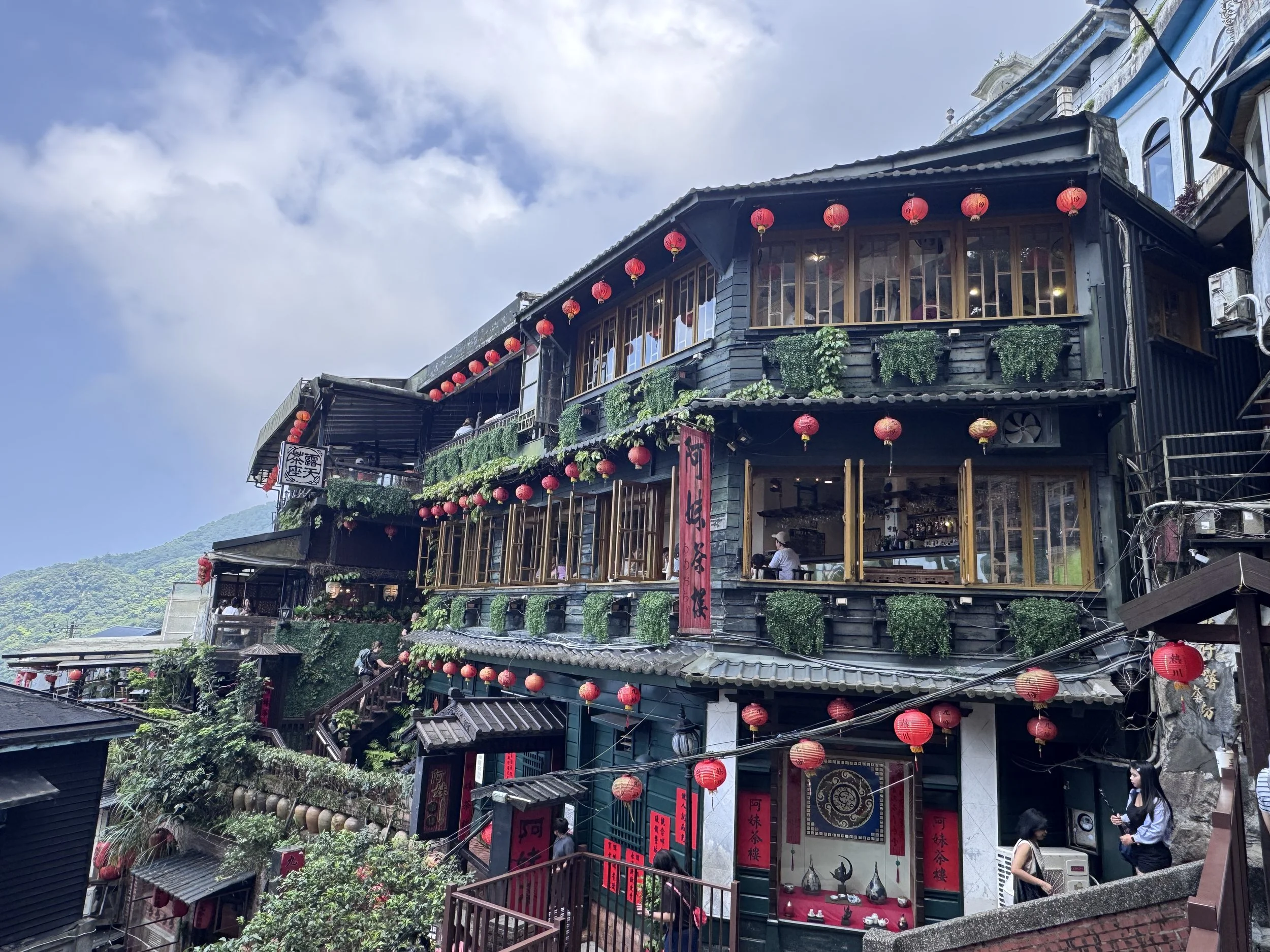
A-Mei Teahouse (Jiufen, Taiwan)
This teahouse is said to be the inspiration for Hayao Miyazaki’s Spirited Away.
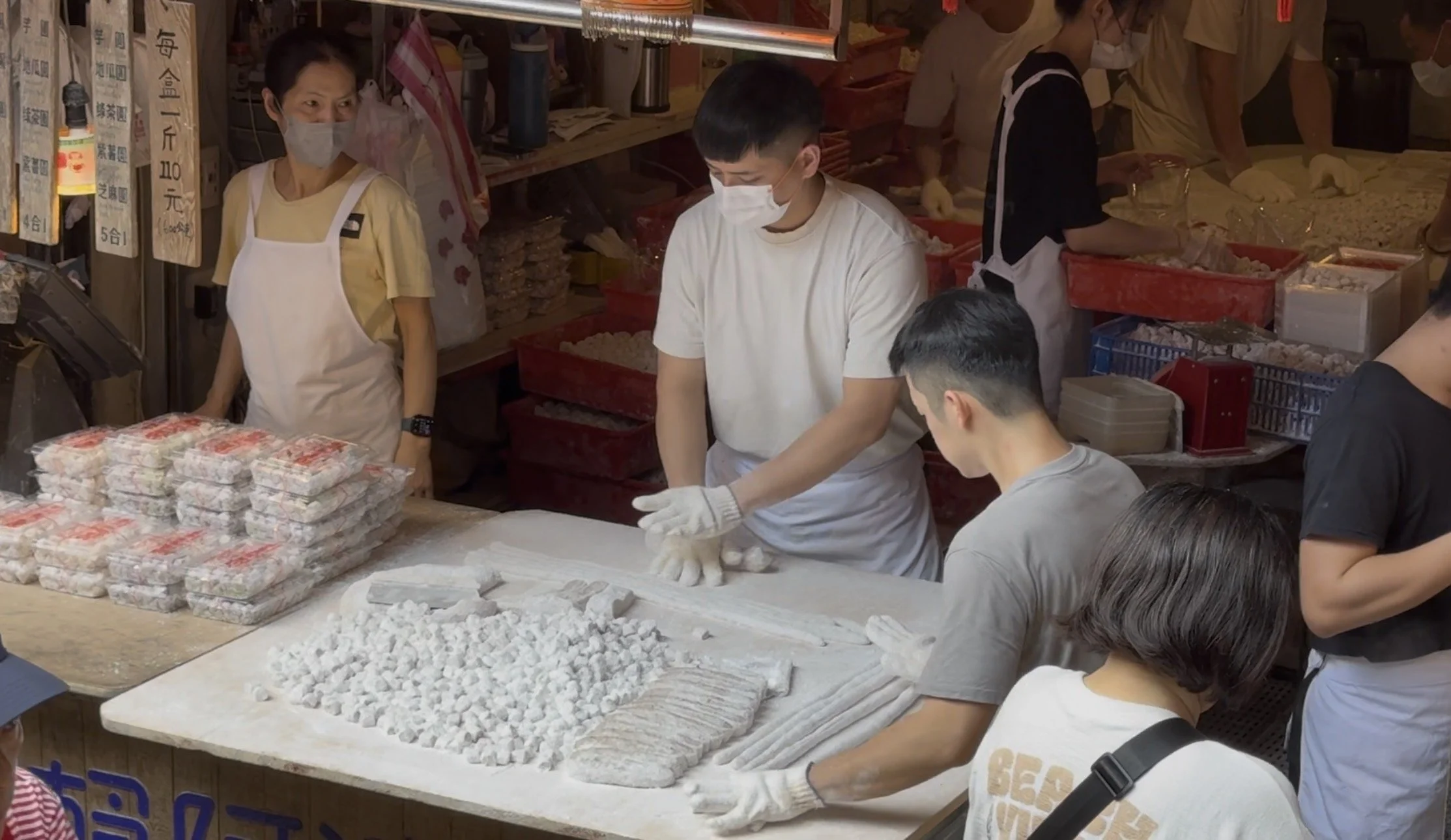
Moji (Mochi) Vendor @ Old Street Market (Jiufen, Taiwan)
Street stalls and food vendors lined narrow streets all of which were lined with red paper lanterns. These vendors quickly and expertly prepared the mochi snacks being sold from the stall.
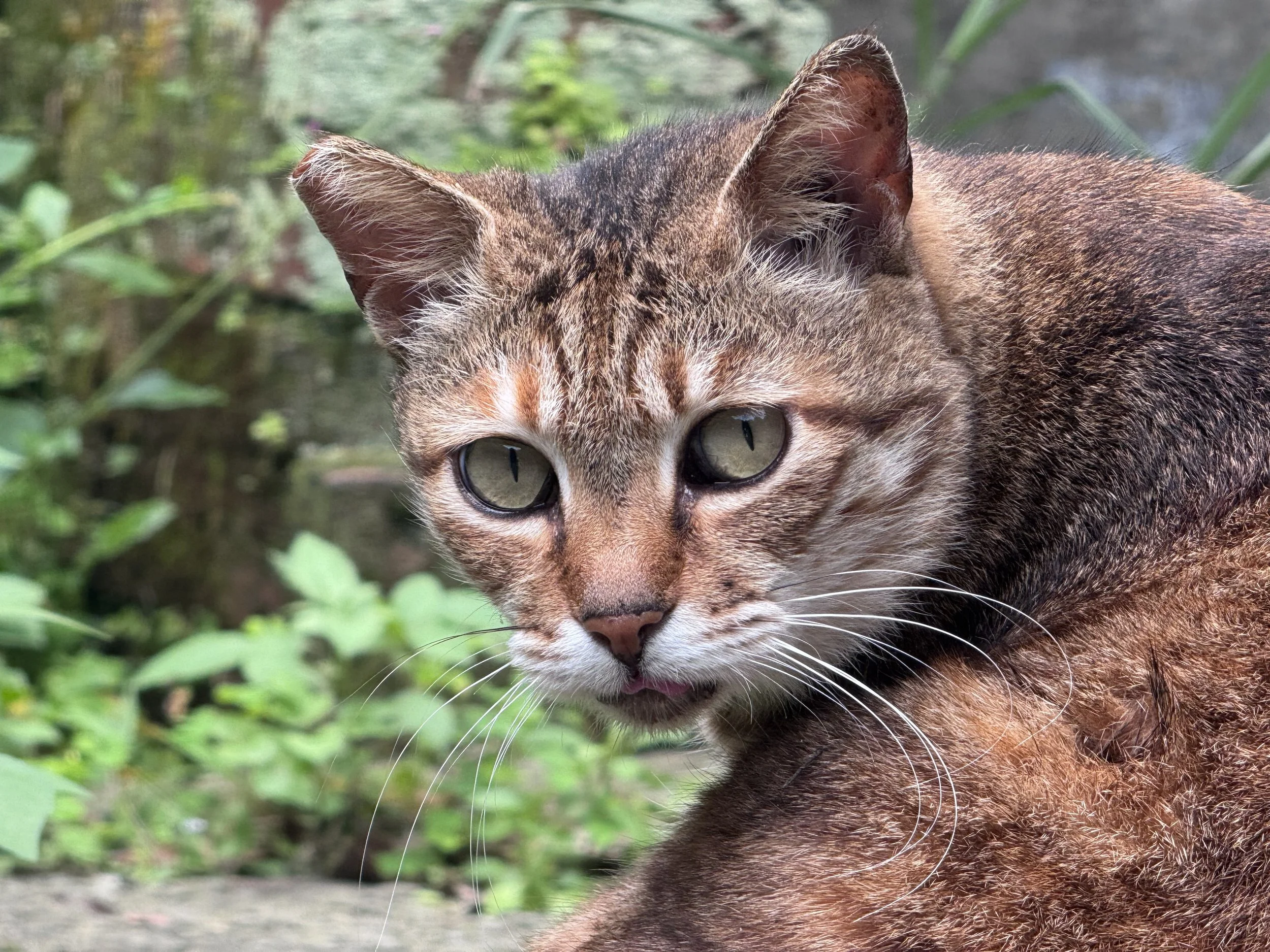
Cat Village (Houtong, Taiwan)
One the many feline residents of this quaint mountain village to the north of Taipei, Taiwan.
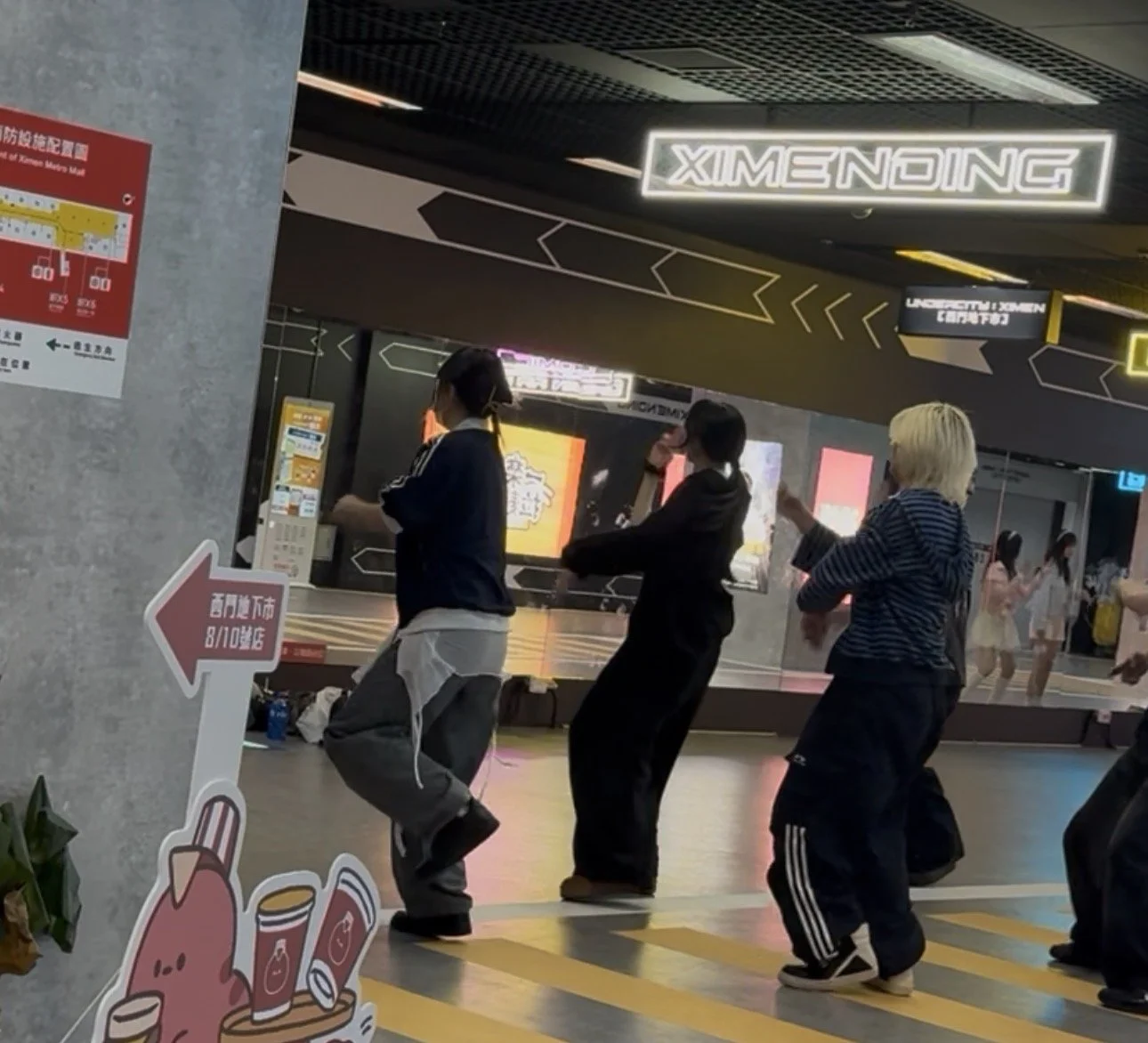
Idol-Inspired Pop Culture - Underground Mall (Taipei, Taiwan)
Taiwan’s youth culture doesn’t just consume J-pop, K-pop, and Mandopop—it participates in them, adapts them, and blends them with its own identity. This subterranean mall in Taipei is filled with manga shops, anime figurines, karaoke and photo booths, and even mirrored corridors where idol-inspired youth gather to practice choreography.
